Far-Infrared Saunas
The plug-and-play radiant alternative to traditional löyly. Lower temperatures, lower install cost, no flue — and a few honest trade-offs we'll cover up front.
Before you read further
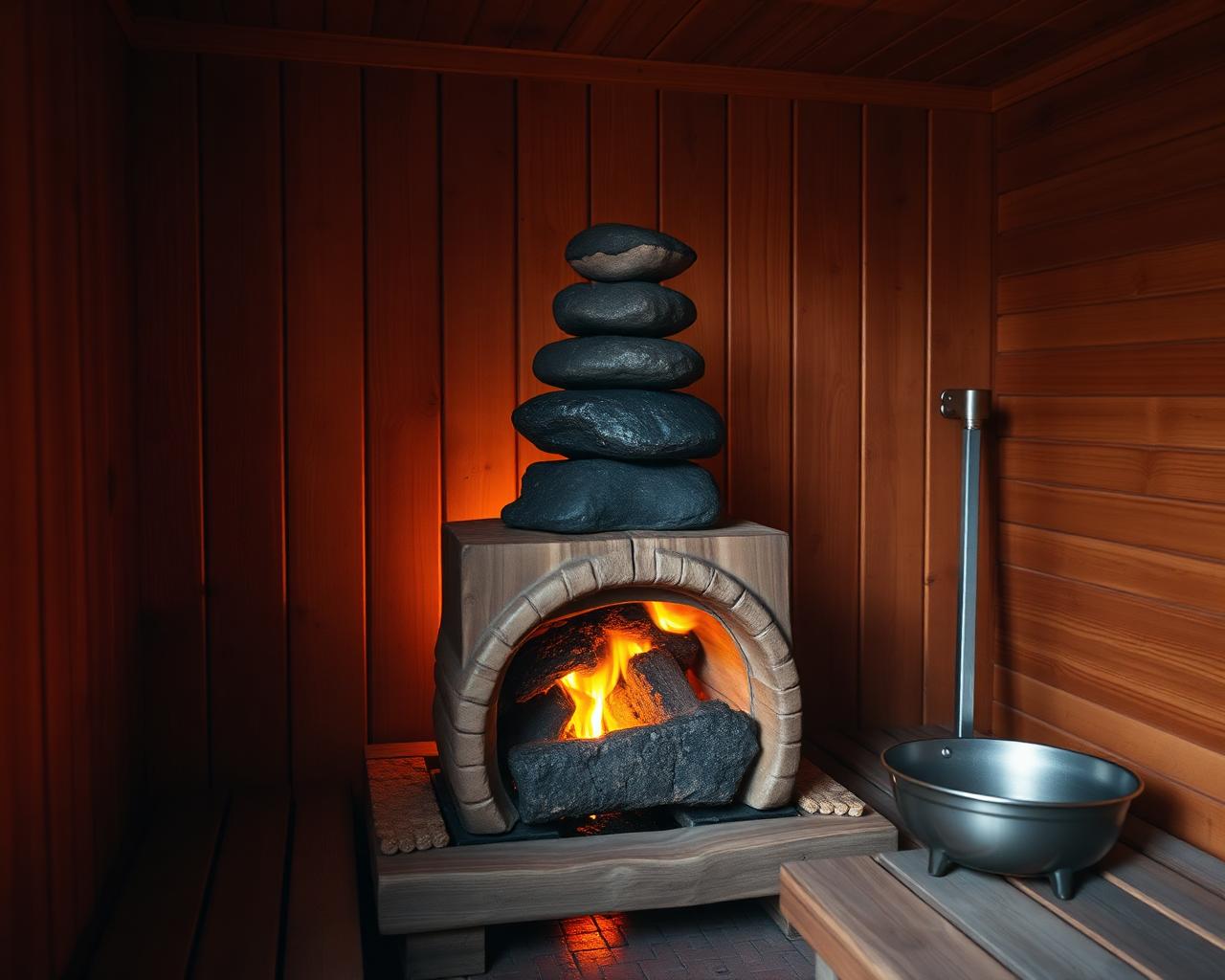
Far-infrared cabins are a different product category, not a cheaper version of a Finnish sauna. They radiate heat onto your body at low temperatures rather than heating the air around you. There's no löyly. There's no steam. There's no crackling stove. If those rituals are why you want a sauna, build the real thing — start with our cabin build guide. If you want quiet, low-effort, low-temperature sweat in a 1m² indoor cabin, FIR is brilliant.
Finnish sauna vs far-infrared
The honest comparison — what each format actually does.
What FIR is — and isn't
The trade-offs we'd want a friend to know before they bought one.
Where FIR shines
- Plug-and-play — no electrician, no flue, no ventilation works
- Tiny footprint (some 1-person cabins fit in a wardrobe)
- Lower running cost per session (~12–25p vs 40–80p for electric Finnish)
- Comfortable for people who can't tolerate 90°C
- Quick to use — 10 minutes warm-up, 30-minute session
Where it falls short
- It is not a Finnish sauna. No löyly, no steam ritual, no humidity
- The traditional sauna culture & community is built around the other format
- Most clinical research on sauna benefits is on traditional Finnish
- Cheap units have high EMF readings — buy from a brand that publishes test data
- Indoor only — not made to live in a cold UK garden
Carbon, ceramic or both?
The three flavours of FIR panel and who each one suits.
Carbon panels
- Larger surface area — gentler, more even heat
- Lower surface temperature (less spot-burning)
- Most modern cabins use these
- Slightly slower to warm up
- Higher-quality units cost more
Ceramic tube heaters
- Higher peak temperatures
- Penetrate deeper, faster
- Cheaper entry-level cabins
- Hot spots — easy to scorch a shoulder
- Less even coverage
Combination (carbon + ceramic)
- Even ambient warmth + targeted hot zones
- More flexible session styles
- Premium pricing
- More to go wrong long-term
Buy the spec sheet, not the marketing
The single most useful filter when comparing FIR cabins.
All electrical equipment emits some level of electromagnetic field. In a FIR cabin, your body is millimetres from the panels for 30+ minutes — so emissions matter more than they would for, say, a kettle.
The reputable end of the market (Clearlight, Sunlighten, Saunum) publishes independent third-party EMF and ELF readings on every model, often measured at the bench surface. Look for readings under 3 milligauss (mG) at the user position — that's roughly background level for a domestic room.
Cheap unbranded cabins from large marketplaces often skip this entirely. If a brand can't tell you the EMF reading, assume it's high. A budget £900 FIR cabin is a false economy — better to spend £1,800 on a measured one or wait and save.
Far-infrared questions
The questions we get asked most about FIR.
Far-infrared cabins & You
Hand-picked products to support your tiny house build.
 Featured
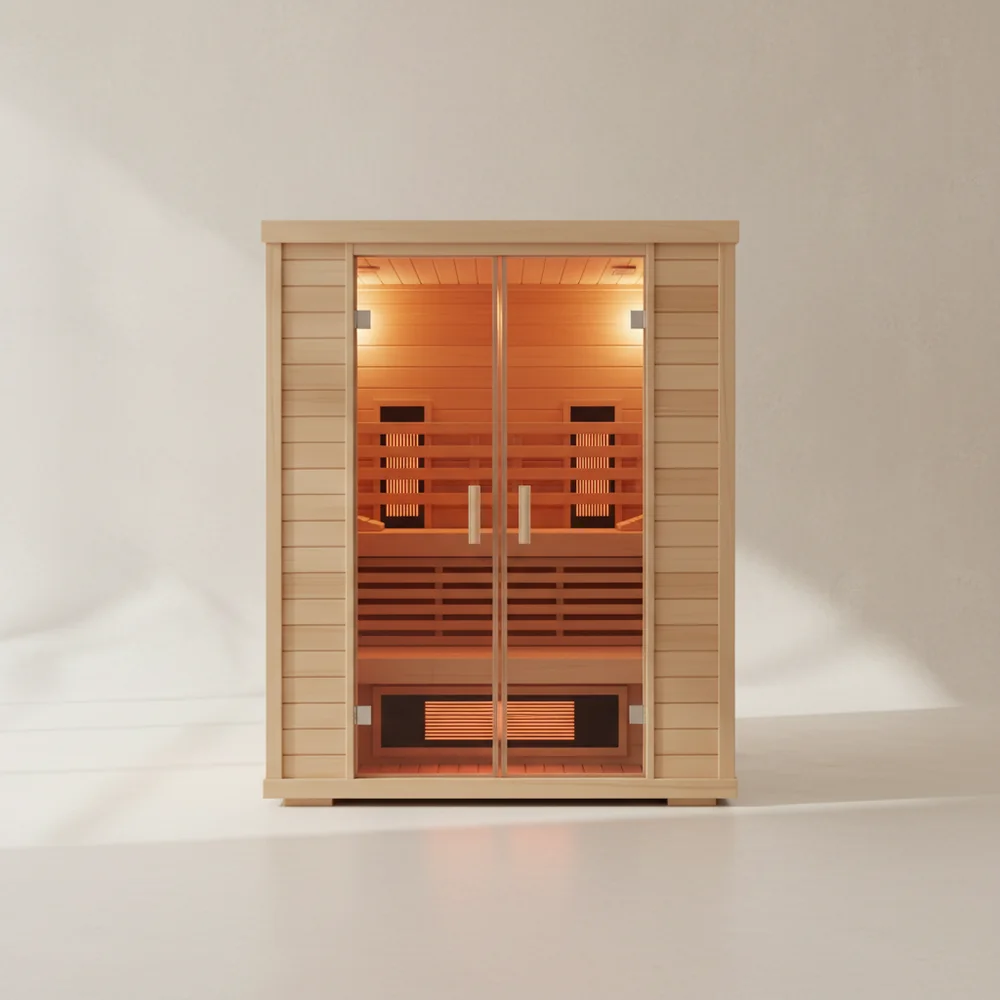
Vidalux 2-Person Full-Spectrum Infrared Sauna
Premium 2-person FIR cabin with low-EMF carbon panels (under 3 mG at the bench), tempered glass front, cedar interior. Plugs into a 13A socket. The brand most often referenced in EMF-conscious reviews.
View on Amazon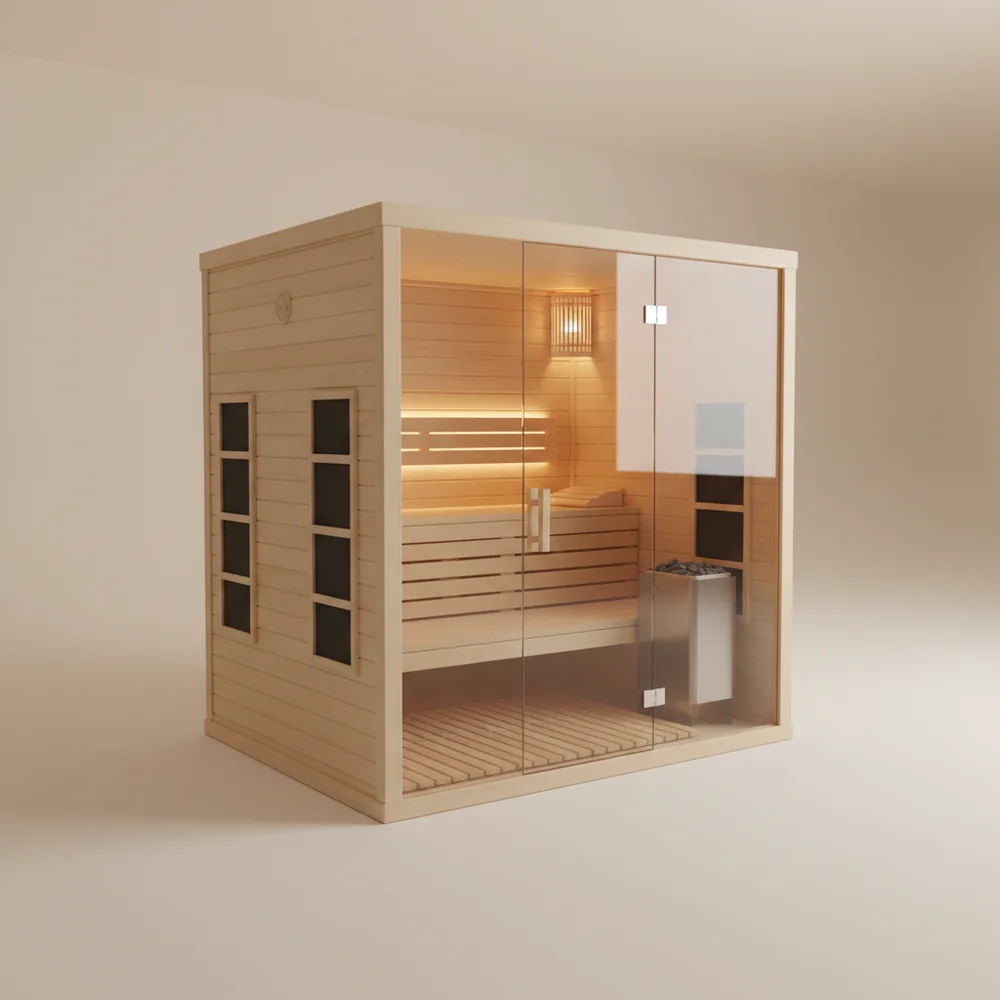
SaunaMed 4-Person Far-Infrared Indoor Sauna
Family-size carbon-panel FIR cabin with corner glass design. Bluetooth audio, chromotherapy lighting, 230V/16A circuit recommended. Indoor-only — needs a stable 18–24°C ambient.
View on Amazon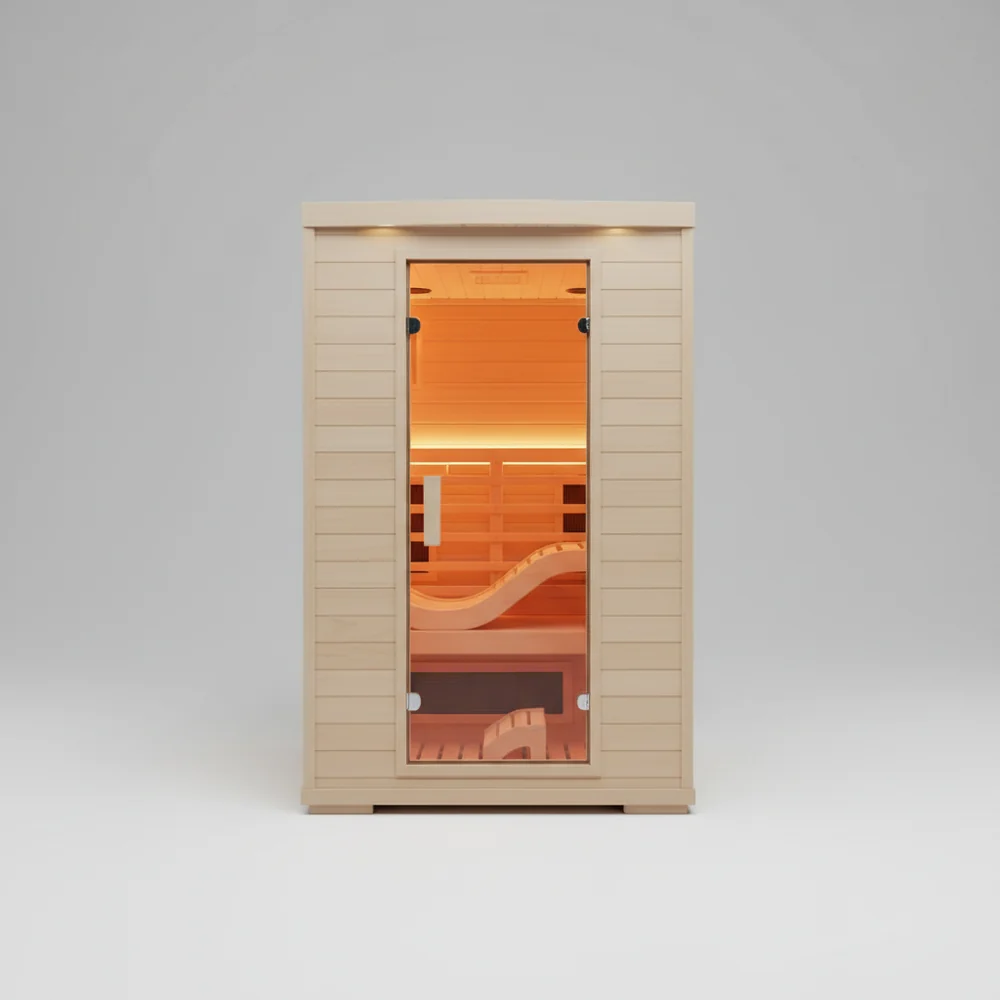
1-Person Indoor Far-Infrared Sauna Room
Compact 90×90cm carbon-panel infrared cabin — fits in a wardrobe corner, plugs into a 13A socket. Tempered glass door, hemlock interior. The flat-friendly entry point to FIR.
View on Amazon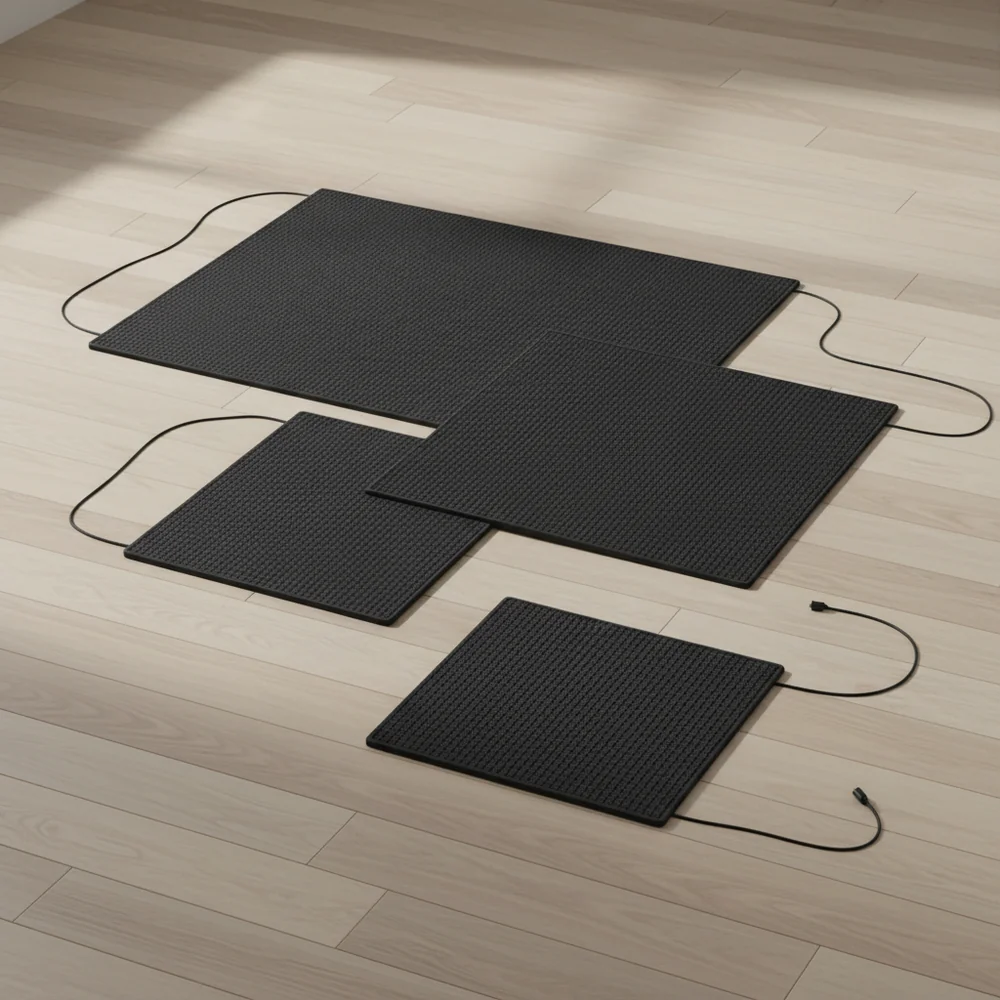
Infrared Sauna Heater Panels (2 x 500W + Control)
Set of four flexible carbon FIR heating panels for retrofitting an existing sauna or building a custom indoor cabin. 1.6 kW total, plug-in, 5-year warranty.
View on Amazon