Sauna Materials & Cladding
The right timber, insulation, vapour foil, and stones — chosen for UK climates and traditional Finnish löyly performance.
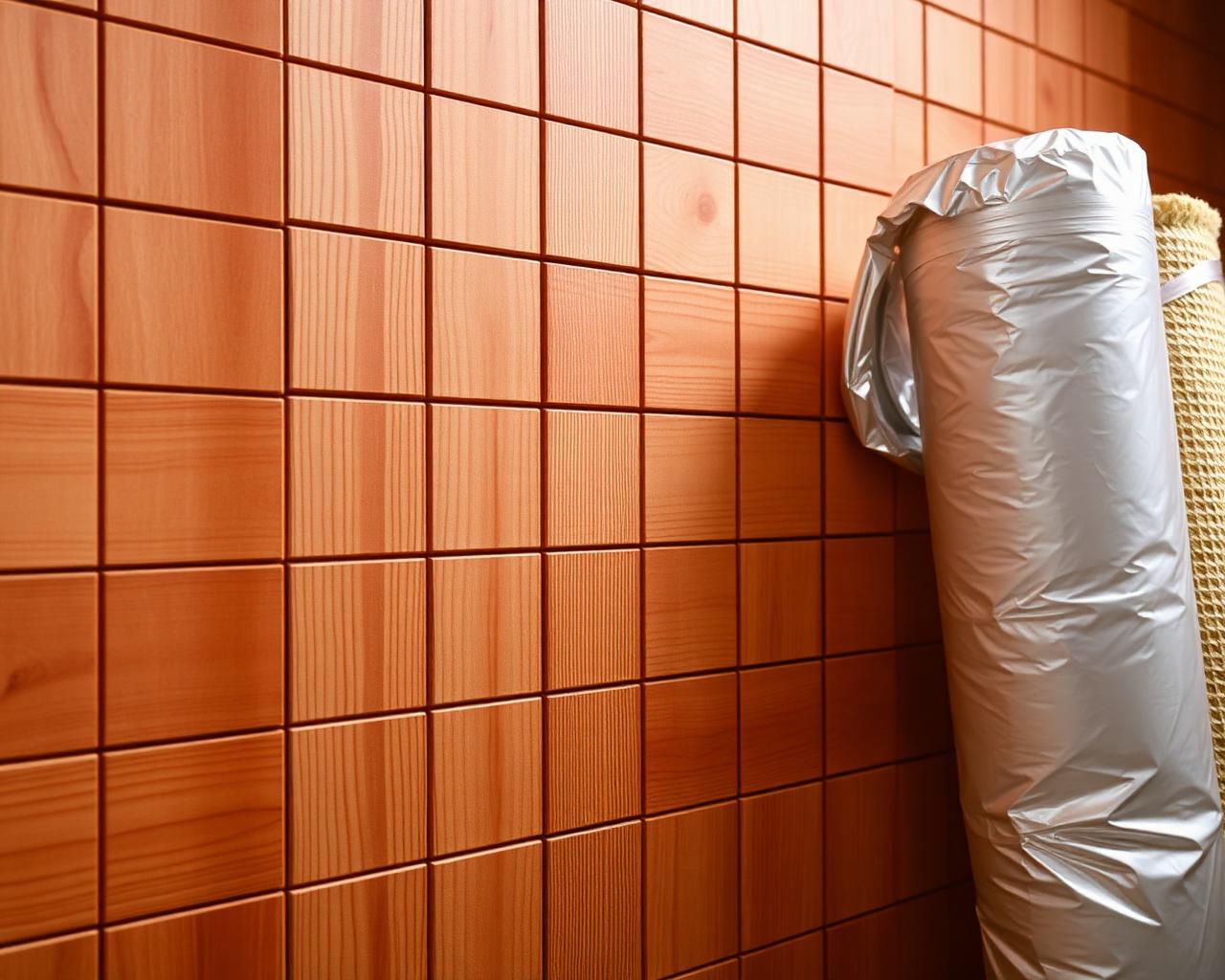
Why Sauna Materials Are Different
A sauna routinely cycles between 20°C and 100°C, with humidity spiking from 5% to 60%+ when water hits the stones. That punishes any timber with high resin, any insulation with a plastic facer, and any metal fixing that conducts heat into bare skin.
Choose resin-free softwoods for inside, mineral wool with aluminium foil for the wall build-up, and stainless steel for any fixing the bather might touch. Get those three right and the rest is detail.
The Wood You Sit Against
Inside the cabin, only resin-free, low-conductivity softwoods belong. Pine and spruce are forbidden in the bench area — they'll burn skin and weep sticky resin.
Thermo-Aspen
£35–£60Resin: Very Low · Colour: Dark caramel to near-black
Aspen thermally modified to ~190°C, removing sugars and sap. Modern favourite for inner cladding and benches — completely resin-free, dimensionally stable, and beautifully dark against the timber tones around it.
Pros
- Zero resin — never weeps or pops
- Cool to touch even at 100°C
- Stunning dark colour without staining
- Naturally rot- and insect-resistant
Cons
- Premium price
- Slightly more brittle than untreated aspen — pre-drill all fixings
Western Red Cedar
£40–£70Resin: Low · Colour: Warm honey, ages to silver
The aromatic classic. Soft, lightweight, naturally rot-resistant. Releases that unmistakable cedar scent when warmed — many holistic builders won't use anything else.
Pros
- Iconic aroma when heated
- Excellent thermal stability
- Lightweight, easy to fix
- Natural resistance to rot and insects
Cons
- Soft — dents and scratches easily on benches
- Imported (carbon footprint)
- Some find the scent overpowering at first
Nordic Aspen (untreated)
£25–£45Resin: Very Low · Colour: Pale cream
The traditional Finnish bench timber. Almost no resin, very low thermal conductivity (stays cool on bare skin), pale and clean-looking.
Pros
- Stays cool on skin
- Very low resin
- Bright, reflects light beautifully
- Affordable for what you get
Cons
- Pale colour shows water marks
- Not dimensionally stable in damp conditions
Abachi (Obeche)
£30–£55Resin: Very Low · Colour: Pale yellow
African hardwood prized for benches. Extremely low thermal conductivity, splinter-free, and a smooth feel against skin.
Pros
- The 'invisible bench' — almost no heat felt on contact
- Splinter-free even after years of use
- Low resin
Cons
- Imported tropical hardwood — check FSC certification
- Soft and easily marked
Insulation & Vapour Foil
Inside a sauna, this is the system that keeps heat in and moisture out of the structure.
Recommended: Mineral Wool / Rockwool
50–70mm of mineral wool (Rockwool, Knauf Earthwool) is the universal choice. It handles temperatures well above 200°C, doesn't off-gas, and is non-combustible — essential when there's a hot stove a few centimetres away.
Holistic alternative: sheep's wool insulation works beautifully for breathable builds, especially if you're using thicker thermo-treated cladding. It manages moisture vapour without losing performance.
Never Use Inside a Sauna
- PIR / Celotex / Kingspan: the foam degrades and the foil facing can off-gas above 80°C
- Spray foam: off-gases at sauna temperatures
- Polythene vapour barriers: melt or warp — only aluminium foil belongs here
- Pine, spruce, fir cladding inside the cabin: high-resin softwoods that pop and weep
Aluminium Vapour Foil — The Critical Layer
A continuous aluminium foil layer on the warm side of the insulation reflects radiant heat back into the cabin AND blocks moisture vapour from migrating into the wall build-up. Skip it and you'll be replacing rotten studs in 5 years.
- Use sauna-grade foil (Thermo-Hanf SaunaFolie, IsoFleece, or branded sauna foil — not loft foil)
- Tape every joint, overlap, and penetration with aluminium foil tape
- Leave a 20–25mm batten gap between foil and inner cladding for drying air
- Continue the foil onto the ceiling — no gaps at the wall/ceiling junction
The Face Your Sauna Shows
Outside, you have more freedom. Choose for aesthetic, weather resistance, and how much patina you want.
UK Larch (outer)
£15–£30Colour: Honey, silvers in 1–2 years
The go-to outer cladding for UK garden saunas. Naturally durable Class 3, no treatment needed, supports British forestry.
Western Red Cedar (outer)
£35–£60Colour: Warm brown to silver
Premium outer cladding — exceptionally durable, lightweight, and dimensionally stable.
Shou Sugi Ban (Yakisugi)
£40–£70Colour: Charcoal black
Japanese charred timber. The carbon layer protects against rot, insects, fire, and UV — essentially maintenance-free for 50+ years.
Sauna Stones (Kiuaskivet)
The hidden hero of every sauna. Wrong stones crack, dust, or fail to hold steam. Right stones turn a hot box into a transcendent löyly.
The traditional Finnish stones are peridotite and olivine diabase — dense, igneous rocks that store enormous heat and release it as silky, soft steam. Vulcanite (volcanic basalt) is the modern alternative.
Avoid: river stones (can explode from trapped moisture), limestone or sandstone (crumble), and unbranded "garden centre" sauna stones (often the wrong rock entirely).
Quantity: follow the heater manufacturer's minimum, then add 15–25kg more for richer steam. A 6kW heater typically takes 20–30kg of stones.
Stacking: largest at the bottom, smallest at the top. Loose, never packed — heat and steam need to circulate. Re-stack and rinse stones once a year.